

The Impact of Market Conditions on Non-Recourse Loan Terms

In today’s financial landscape, non-recourse loans have become a popular financing option for investors and businesses. Unlike traditional loans, they limit the lender’s claim to the collateral specified in the loan agreement, offering borrowers a layer of protection. However, the terms of these loans are significantly influenced by prevailing market conditions, affecting both availability and cost. Understanding how these external factors play a role can empower borrowers to make informed financial decisions.

Interest Rates and Borrowing Costs
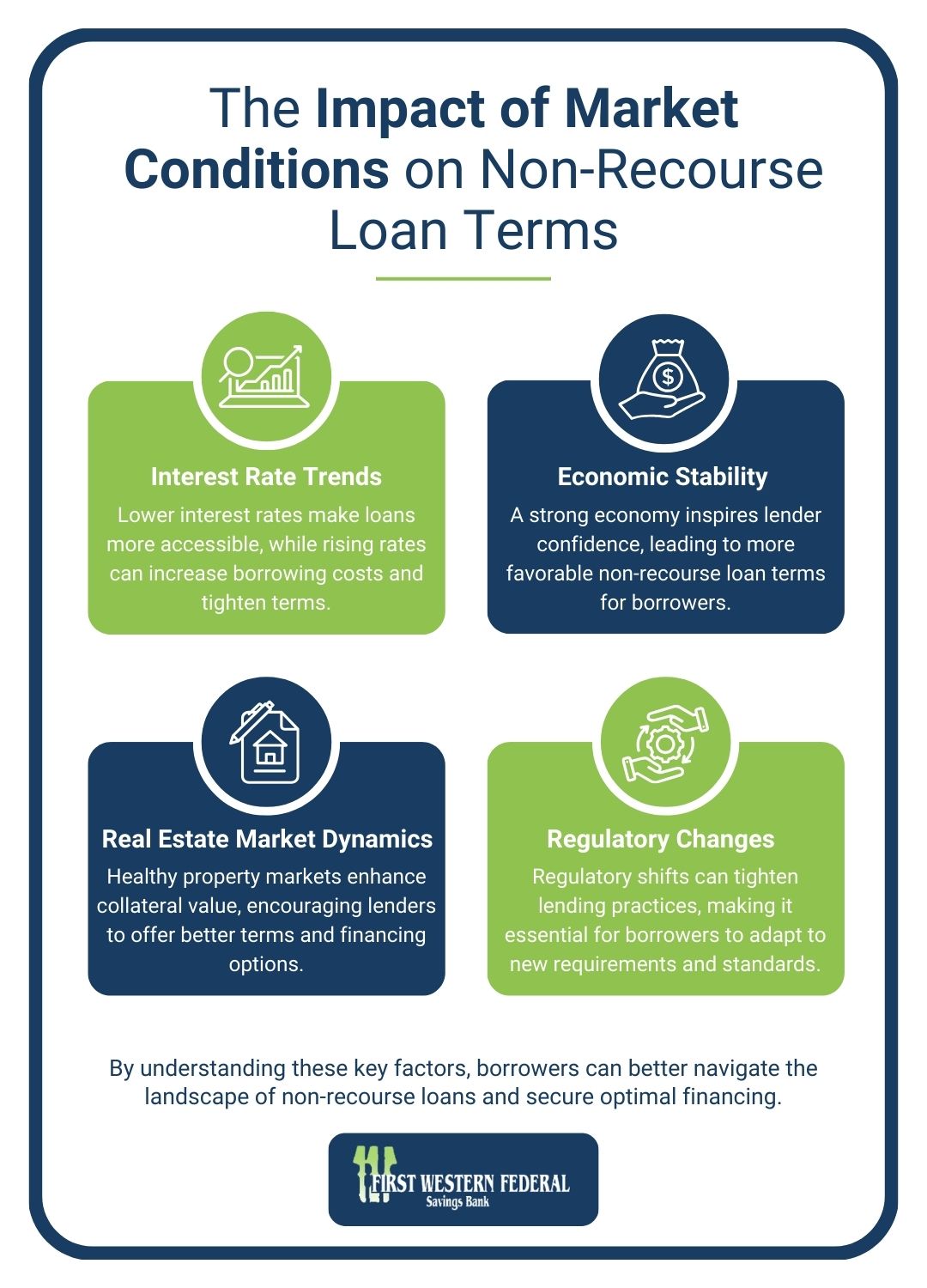
One of the most immediate impacts of market conditions on non-recourse loans is the fluctuation of interest rates. When interest rates rise, lenders typically tighten their lending criteria and may impose stricter terms, resulting in higher borrowing costs. This shift can create challenges for businesses looking to secure financing. Conversely, in a low-interest-rate environment, lenders may offer more favorable terms, making non-recourse loans more accessible. As a borrower, keeping an eye on interest rate trends can help you gauge when to approach lenders for the best terms.

Economic Stability and Risk Assessment
Market conditions are often reflective of overall economic stability, significantly influencing risk assessment by lenders. In uncertain economic climates, lenders may perceive higher risk in issuing non-recourse loans, which could lead to increased down payment requirements or a shorter repayment term. On the flip side, when the economy is thriving, lenders may adopt a more lenient approach, leading to more beneficial terms for borrowers. Understanding the economic landscape is crucial for borrowers as it can directly affect the negotiation process and the structure of the loan.

Real Estate Market Trends
For real estate investors, the local property market plays a vital role in determining non-recourse loan terms. A robust real estate market can enhance property valuations, increasing lender confidence in the collateral offered. This confidence often translates into better loan terms for borrowers, such as lower interest rates or extended repayment periods. Alternatively, in a declining real estate market, borrowers may face stiffer terms as lenders recalibrate their risk assessments, relying heavily on their collateral’s estimated value.

Regulatory Environment and Lending Policies
Market conditions also intersect with regulatory environments, impacting lending policies related to non-recourse loans. Changes in government regulations can shift lender strategies and criteria, affecting the overall lending landscape. For instance, increased regulatory scrutiny can lead lenders to adopt more conservative approaches, thereby tightening loan conditions. Staying informed on regulatory updates can help borrowers navigate potential shifts and secure more favorable agreements.
Understanding how market conditions can influence non-recourse loan terms is essential for savvy borrowers. By staying informed about interest rates, economic health, real estate trends, and regulatory changes, you can strategize effectively to secure the best loan terms available. At First Western Federal Savings Bank, we’re here to assist you in navigating these complexities. Contact us today to learn more about how we can support your borrowing needs and help you achieve your financial goals.